
- Home
- - - - - - - -
- Lake Washington
- Puget Sound
- - - - - - - -
- Blogs
- Newsletters
- - - - - - - -
- Team SOPs
- SCRET Bios
- - - - - - - -
- About SCRET
- Become A Member
- Contact Us
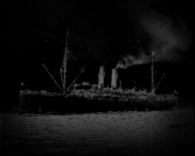
| A.J. Fuller |
| Saturday, 26 January 2008 | |
|
Windjammer built in 1881, sunk in Elliot Bay in 1918. The A. J. Fuller was launched in May 1881 in Bath, Maine. The ship was commissioned by Flint & Company of New York for the Cape Horn trade. A "downeaster", the A. J. Fuller was built of wood in the New England tradition by John McDonald. The ship’s Certificate of Registry lists her as having three decks, three masts, a length of 229.3 feet, a breadth of 41.5 feet, a depth of 17.8 feet, and a height of 8.2 feet. The ship was rigged with a billet head and an elliptic stern. Her registry lists four enclosures on the upper deck, which include a cabin, a poop, a house, and quarters. The A. J. Fuller was listed at 1,849 tons gross, 1,782 tons net register, 2,700 tons dead weight capacity and had 1,360 metric feet lumber capacity. Background InformationHere the Fuller rests on ice in Bristol Bay On October 30, 1918, the A. J. Fuller arrived in Seattle with a full cargo of salmon and salt. She was moored to a large steel buoy in the east anchorage of Elliott Bay, about 2000 feet off Harbor Island, and all of her crew went ashore except for the first mate and one watchman. In a dense fog, the steamship Mexico Maru left the Milwaukee ocean dock on her way to Tacoma. Her crew stated that fog sirens were blown at regular intervals, but that they heard no return from the Fuller. Upon sighting the sailing vessel, the Mexico Maru threw her engines into full speed astern, but it was too late and she collided with the Fuller. The collision apparently caused a 10 foot hole in the bow of the wooden ship causing it to sink rapidly. The first mate and watchman escaped on a small boat. On ice in Alaska Some months later, Captain Henry Finch, a Seattle diver, dove approximately 70 feet below the surface and retrieved the compass and other fittings with a grappling hook. Although salvage was deemed possible, the underwriters decided against it, and the owner surrendered the ship’s enrollment, listing her as a "total loss." In 1976, during the search for a Panamanian freighter’s lost anchor, old anchor chain believed to be from the Fuller was located. However, its association was never substantiated. The Fuller at anchor Identifying The ShipwreckCaptain Mark Haskell In 1988 and 1989, a side scan sonar survey of Elliott Bay was conducted to identify submerged cultural resources, and the results of this survey are published in US Army Corps of Engineers PSDDA Report, dated August 1988, entitled "The location, identification and evaluation of Potential Submerged Cultural Resources in Three Puget Sound Dredged Material Disposal Sites" (the "PSDDA Report"). The PSDDA Report states "we believe there is a reasonable chance that target 3 (is) the remains of the A. J. Fuller". The PSDDA Report describes target 3 as a large shipwreck, 170 feet by 40 feet at a depth of 220 feet. The PSDDA Report also notes that the length of target 3 is significantly less than the 229.3 feet listed in the A. J. Fuller’s Certificate of Registry. This discrepancy has never been resolved. In addition, Gibbs reports a barge (M. T. No. 6) sinking on December 31, 1949, in the approximate location of the A. J. Fuller (see Gibbs, James A., Shipwrecks of the Pacific Coast, 1957). As the A. J. Fuller is one of two shipwrecks listed by Washington’s Office of Historic Preservation as eligible for listing on the National Register of Historic Places, a resolution of this uncertainty is important.
|
|
| Last Updated ( Tuesday, 12 February 2008 ) |
| < Prev | Next > |
|---|